Important Notice: Reading on PHOENIX? Click “Read Original” to Access the Full Story.
United States Vice President JD Vance has issued a strong warning to Israeli critics of the newly signed U.S.-Iran Memorandum of Understanding, urging restraint and emphasising the importance of respecting the peace process in Lebanon.
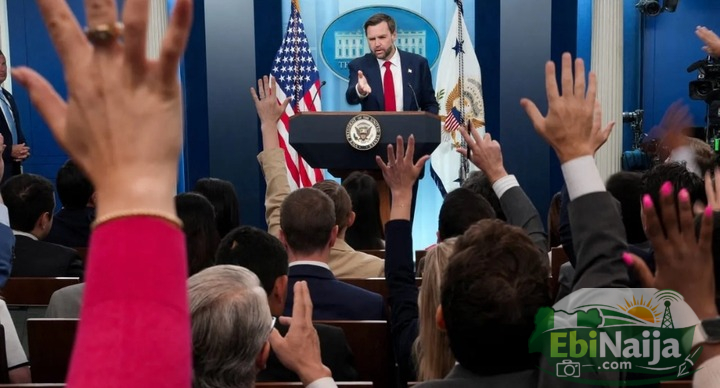
According to The Jerusalem Post on Thursday, June 18, 2026, Vance made the remarks while addressing reporters at the White House, where he defended the agreement and pushed back against Israeli officials who have openly criticised the deal.
He said Israel should be careful not to undermine its strategic relationship with Washington at a sensitive moment in regional diplomacy.
Vance stated that President Donald Trump remains a key international ally for Israel and suggested that some Israeli officials were misreading the current geopolitical reality.
“I might not be attacking the only powerful ally that I have anywhere left in the entire world,” Vance said, referring to the United States’ role in supporting Israel.
He further stressed that the U.S. President is uniquely positioned among global leaders in his support for Israel, describing Trump as the only head of state with consistent sympathy for the country while also holding significant global influence.
“The problem for Israel is not Donald J. Trump, and anybody in Israel who thinks their biggest problem is the President of the United States needs to wake up and smell the reality of the situation that the country is in,” he added.
Vance also reinforced Washington’s position that the ongoing peace process, particularly in Lebanon, must be respected by all parties involved. He said the agreement is designed to stabilise the region and reduce further escalation.
“Fundamentally, the Israelis, just like everybody, have to respect this peace process that is fundamentally good for them and for the entire region,” he said.
His comments come amid increasing tension between U.S. officials and members of Israel’s government, particularly over disagreements on how to handle Iran and allied groups in the region.
Some Israeli ministers have publicly rejected aspects of the agreement, arguing that it could limit Israel’s operational freedom in dealing with perceived security threats.
Vance, however, maintained that the U.S.-brokered framework is aimed at long-term stability and urged Israel to align with the diplomatic process rather than escalate military activity in Lebanon.
The exchange highlights widening differences between Washington and parts of Israel’s political leadership as the implementation of the U.S.-Iran memorandum begins to take shape across the Middle East.