Important Notice: Reading on PHOENIX? Click “Read Original” to Access the Full Story.
Israeli Prime Minister Benjamin Netanyahu has declared that Israeli forces will not withdraw from occupied areas in southern Lebanon, directly challenging provisions linked to the newly signed U.S.-Iran agreement aimed at reducing regional hostilities.
According to Anadolu Agency on Thursday, June 18, 2026, Netanyahu made the remarks as international pressure builds around the implementation of the memorandum of understanding between Washington and Tehran, which includes calls for respect of Lebanon’s sovereignty and territorial integrity.
Speaking in statements carried by Yedioth Ahronoth, Netanyahu insisted that Israel’s military presence in the region remains essential for national security.
“Israel will restore security to the north,” he said.
“This requires maintaining the security strip in southern Lebanon, and that requires that we not withdraw as long as Israel’s security needs require it.”
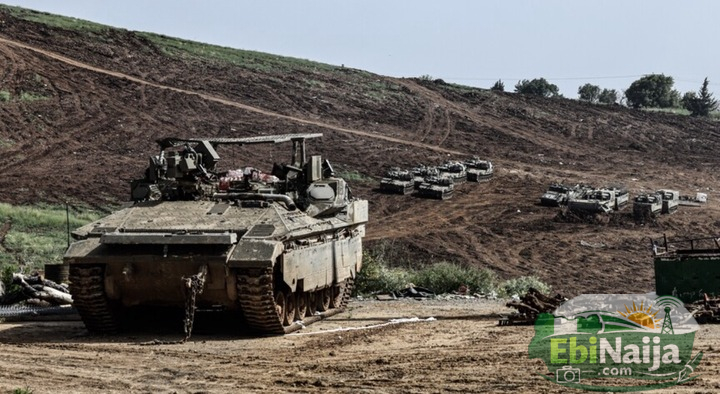
His comments come amid ongoing Israeli military operations in southern Lebanon, where large areas remain under Israeli control following sustained conflict. Israeli authorities have maintained that the presence is necessary to prevent cross-border attacks and to secure northern communities.
The remarks also follow the publication of an Israeli military map showing the extent of its current deployment inside Lebanese territory. The map reportedly indicates a controlled zone stretching several kilometres deep in parts of southern Lebanon, with Israeli forces occupying strategic border areas and multiple towns within the region.
According to Lebanese official figures, the ongoing conflict has resulted in significant human and infrastructural losses, with thousands reported killed and injured, alongside widespread displacement of civilians.
Despite the terms outlined in the U.S.-Iran agreement, which reportedly calls for an “immediate and permanent cessation of military operations on all fronts, including in Lebanon,” Netanyahu maintained that Israel’s security considerations take precedence over external diplomatic arrangements.
He also reiterated Israel’s broader strategic objective of countering perceived threats from Iran and its regional allies, stating that Israel’s military campaign is not yet concluded and that additional challenges remain.
“The battle is not over yet,” he said.
Netanyahu’s position highlights the growing tension between diplomatic efforts led by the U.S. and Iran and the realities on the ground, where military operations and territorial control continue to shape the trajectory of the conflict.
As implementation of the agreement begins, questions remain over how enforcement will be achieved in areas where key regional actors are already taking opposing positions, raising concerns about whether the fragile peace framework can hold under sustained political and military pressure.