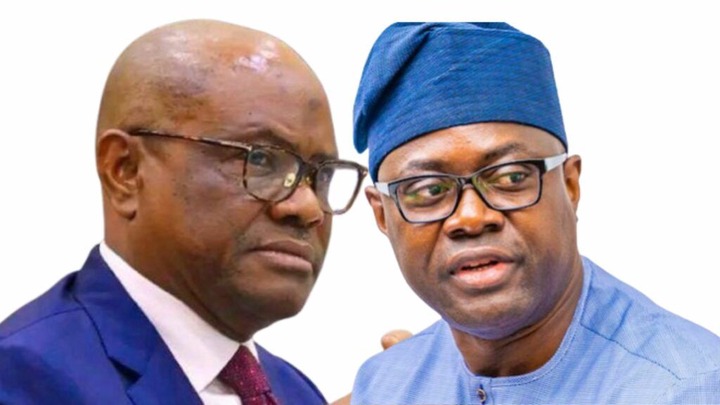
According to a report by the Punch Newspaper on Monday March 30, 2026, the governors-backed National Working Committee (NWC) of the Peoples Democratic Party, led by Tanimu Turaki, has dismissed the recent convention organised by a rival faction aligned with Nyesom Wike as illegitimate.
In a statement issued on Monday by its National Publicity Secretary, Ini Ememobong, the committee described the convention as a “jamboree” and accused the organisers of acting in contempt of ongoing legal proceedings.
Observers say the development highlights deepening divisions within the PDP, as competing factions continue to assert control over the party’s leadership and structure.
According to the statement, the governors-backed NWC has approached the Supreme Court of Nigeria to seek a final resolution of the dispute.
Ememobong noted that recent developments within the party have raised concerns among members nationwide regarding its future and stability.
“With the series of disturbing activities occurring in succession within the last 48 hours, genuine members of the Peoples Democratic Party across the country have expressed their concerns and are asking what the future holds for the party and, by extension, our country’s democracy,” he said.
Observers say the appeal to the Supreme Court reflects an attempt to resolve the crisis through legal means, following months of internal disagreements.
Analysts note that leadership disputes within political parties can have far-reaching implications, affecting cohesion, strategy, and electoral prospects.
They highlight that unresolved conflicts often weaken party structures and create uncertainty among supporters.
Observers say the PDP’s internal crisis comes at a critical time, as political activities begin to intensify ahead of the 2027 general elections.
Political commentators suggest that the outcome of the legal battle could significantly shape the party’s direction and influence its ability to compete effectively.
They emphasise that unity and clarity of leadership are essential for any political party seeking to maintain relevance.
Analysts also point out that factional conventions and parallel structures can complicate party administration and decision-making.
They note that resolving such disputes requires adherence to constitutional provisions and judicial rulings.
Observers highlight that the involvement of key political figures underscores the high stakes associated with the leadership contest.
Experts suggest that the Supreme Court’s eventual decision will be pivotal in determining the legitimacy of competing claims.
They emphasise that a clear resolution could help restore confidence and stabilise the party.
As the situation unfolds, attention will be on how party members and stakeholders respond to the ongoing developments.
For many observers, the crisis reflects broader challenges within Nigeria’s political system, where internal party democracy remains a recurring issue.
The development underscores the importance of strong institutional frameworks and effective conflict resolution mechanisms.
Ultimately, the PDP’s ability to navigate the crisis will be critical in shaping its future and role in the country’s political landscape.