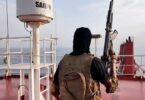
According to a report by Reuters on Thursday, April 23, 2026, The United States military has intercepted three Iranian-flagged oil tankers in international waters across Asia, according to reports cited by Reuters, marking a significant escalation in maritime enforcement operations linked to Iran’s energy exports.
The vessels were reportedly redirected by US forces while operating near key shipping zones close to India, Malaysia, and Sri Lanka. Officials familiar with the operation said the ships were moved away from their original positions as part of precautionary measures aimed at reducing the risk of naval hazards, including the potential presence of floating mines.
According to the report, the US is conducting these operations outside the Strait of Hormuz, focusing instead on open waters where intervention can be carried out with reduced risk of direct confrontation in the heavily monitored chokepoint.
The intercepted tankers have been identified as the Deep Sea, a supertanker carrying a partial crude load; the Sevin, which was reportedly filled to around 65 percent of its one-million-barrel capacity; and the Dorena, described as fully loaded with approximately two million barrels of oil.
The operation reflects ongoing efforts by Washington to enforce sanctions on Iranian oil shipments, which have remained a point of tension between the two countries amid wider regional instability.
While no official confirmation has been issued by Iranian authorities regarding the status of the vessels, maritime tracking data suggests deviations from their planned routes following the interception.
The development comes as global shipping routes remain under heightened surveillance due to security concerns in strategic waterways. Analysts say continued enforcement actions could further strain already fragile maritime trade flows in the region.
The situation remains under close observation as both regional and international stakeholders assess the potential economic and geopolitical impact of the interceptions.