Please Kindly Pay Attention: If you’re reading on PHOENIX, please click the “Read Original” button at the top right to view the full article.
According to a report by DAILY POST on Tuesday 9th June 2026, the Independent National Electoral Commission (INEC) has raised concerns that recent court rulings affecting parts of its election timetable could complicate preparations for the 2027 general elections unless higher courts provide urgent clarification.
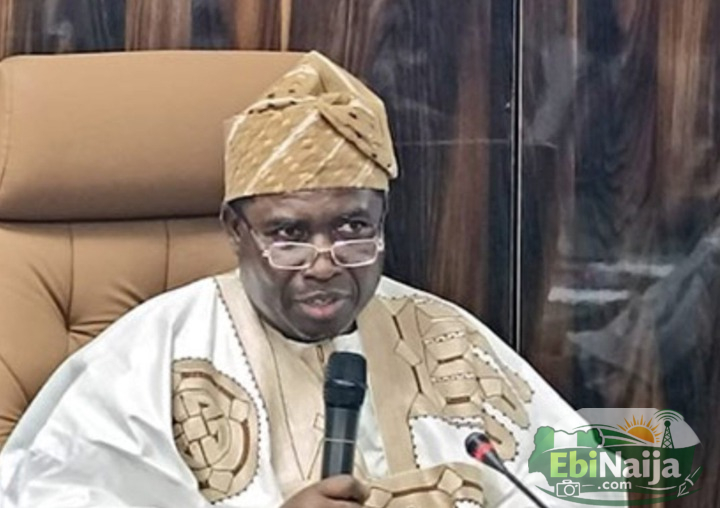
INEC Chairman, Prof. Joash Amupitan, disclosed this on Tuesday during the Commission’s second quarterly consultative meeting with political party leaders in Abuja.
According to him, the Commission has already filed appeals against two Federal High Court judgments that challenged aspects of its timetable and schedule of activities for the 2027 polls.
Amupitan explained that although INEC respects the decisions of the courts, the judgments have created legal uncertainties regarding the Commission’s authority to coordinate and regulate electoral activities.
The rulings stem from separate suits filed by the Youth Party and the Social Democratic Party (SDP), in which the court questioned certain timelines contained in INEC’s election schedule; While affirming the Commission’s power to issue election timetables, the court nullified some timelines related to candidate nomination and substitution, insisting that statutory provisions under the Electoral Act 2026 cannot be shortened through administrative guidelines.
To avoid confusion and ensure smooth election planning, Amupitan said INEC is seeking definitive interpretations from the appellate courts.
He emphasized that the Commission’s timetable is built around a chain of interconnected activities necessary for conducting credible elections; Beyond timelines specifically outlined in the Electoral Act, he noted that several critical processes—including party membership verification, monitoring of primaries, candidate nominations, voter education, personnel training, and printing of election materials—must be carefully coordinated within a fixed schedule.
The INEC chairman warned that failing to harmonize these activities could disrupt election planning and weaken the Commission’s ability to fulfill its constitutional mandate.
He added that logistical realities such as weather conditions, terrain challenges, procurement of sensitive materials, and configuration of the Bimodal Voter Accreditation System (BVAS) make proper scheduling essential.
Despite the legal dispute, Amupitan assured political parties and Nigerians that INEC remains committed to delivering a transparent and credible 2027 general election in line with constitutional provisions, the Electoral Act, and lawful court decisions.
Meanwhile, the Inter-Party Advisory Council (IPAC) has called for an urgent review of the Electoral Act 2026, arguing that the removal of indirect primaries contributed to the difficulties experienced by political parties during their recent nomination processes.
IPAC National Chairman, Dr. Yusuf Mamman Dantalle, said restricting parties to either direct primaries or consensus arrangements created unnecessary tensions and administrative burdens.
He argued that indirect primaries previously provided political parties with a practical mechanism for managing internal contests and reducing disputes among aspirants.
According to Dantalle, several parties struggled to implement consensus arrangements after aspirants had already declared interest and purchased nomination forms, resulting in dissatisfaction and legal challenges in some cases.
He also alleged that some parties limited access to nomination forms or failed to adequately publicize primary election schedules to avoid complications associated with direct primaries.
Describing these developments as unintended consequences of the current law, Dantalle urged lawmakers to amend the Electoral Act and restore greater flexibility to the party nomination process.
He further expressed concern over the deadline for submitting updated membership registers linked to National Identification Numbers (NIN), noting that logistical challenges prevented some genuine members from being captured.
The IPAC chairman maintained that recent events have validated earlier concerns raised by the council and underscored the need for reforms aimed at strengthening internal democracy and improving Nigeria’s electoral system.