Important Notice: Reading on PHOENIX? Click “Read Original” to Access the Full Story.
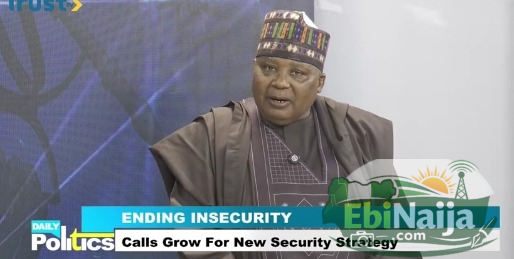
According to a video posted on TRUST TV, on Thursday June 18, 2026, the Chairman of the Arewa Broadcast Media Practitioners Forum, Abdullahi Yelwa, has cited developments in Borno State as evidence that communities capable of defending themselves are significantly less likely to be targeted by armed non-state groups, using this to strengthen his argument for extending community-based defensive capacity to other conflict-affected states in northern Nigeria.
Yelwa made the observation during his appearance on the Daily Politics programme on Trust TV, where he was presenting the Arewa Broadcast Media Practitioners Forum’s position on community self-defense as a complement to formal security operations.
He said the experience in Borno offered a practical lesson that went beyond theory and could be observed on the ground.
He acknowledged that the security situation in the northeast, where Boko Haram had been the primary threat, differed in some respects from the banditry crisis in the northwest and north-central regions.
However, he argued that the underlying principle, that armed communities were harder targets and therefore less frequently attacked, was consistent across both contexts and deserved to inform national policy.
In his words, Abdullahi Yelwa said, “Even now there are some communities in Borno where if the Boko Haram people know that that community is well-armed, they rarely go there. You don’t find them there,” he said.
Yelwa said this pattern was not accidental or coincidental but reflected a deliberate calculation by criminal and insurgent groups.
He noted that armed groups, just like ordinary criminals, weighed the risks before choosing targets and that communities offering resistance consistently ranked lower on the list of preferred targets.
He used this point to argue that community defensive capacity was a legitimate and proven security tool that the government should formally embrace, structure, and support rather than discourage or dismiss as a threat to the monopoly of force.
He called for a coordinated northern-wide strategy that combined formal military operations with empowered community units to create a more resilient and comprehensive response to the ongoing crisis.