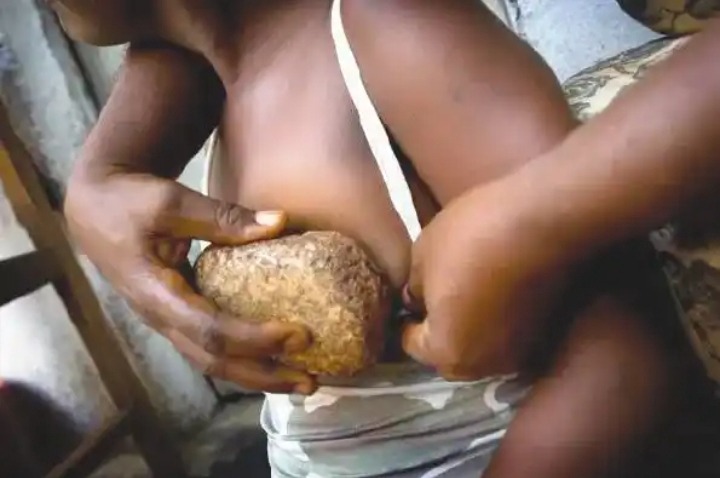
According to a report by the Punch on Sunday, March 8, 2026, breast ironing, a painful cultural practice intended to delay the development of young girls’ bodies, continues to leave victims with physical and emotional scars. Survivors recount nights filled with fear, pain, and secrecy, forced upon them by relatives who believed they were acting in their best interest.
Ajake, a fishmonger from Badagry, Lagos, shared her harrowing experience as a young girl. She explained that despite the extreme measures taken against her developing body, the practice ultimately failed to stop natural growth. Reflecting on the ordeal, she said, “I don’t know where they learnt that from, because that didn’t stop the breasts from developing.”
Ajake recalled the fear and confusion she felt as her aunt and an older woman pressed and flattened her breasts, insisting on silence throughout the ordeal. The practice, she explained, was meant to prevent attention from men and avert early marriage, yet the pain inflicted was severe and lasting.
For Ajake, the trauma extended well beyond the physical pain. She described how the secretive nature of the practice, coupled with threats and intimidation, created long-term psychological stress. Even as an adult, she remains marked by the memory, both emotionally and physically, with uneven breasts and scars as reminders of her ordeal.
Medical professionals have consistently warned about the dangers of breast ironing, noting risks such as tissue damage, infections, deformities, and future complications with breastfeeding. Beyond physical harm, the psychological impact—shame, low self-esteem, and anxiety—often persists well into adulthood.
Activists and human rights groups argue that breast ironing is a violation of children’s rights, stressing that education and awareness campaigns are vital to ending the practice. Communities are being urged to abandon harmful traditions and protect girls’ health, dignity, and natural development.