Please Kindly Pay Attention: If you’re reading on PHOENIX, please click the “Read Original” button at the top right to view the full article.
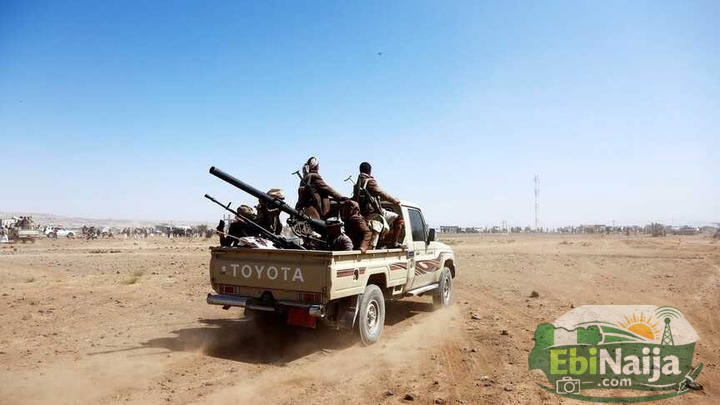
According to a report by Anadolu Agency on Tuesday, June 9, 2026, heavy fighting has broken out in Yemen’s western Hodeidah province as government forces and Houthi fighters exchanged intense fire in renewed clashes that stress the fragility of the country’s long-running conflict, state media reported on Tuesday.
According to Al-Yemen TV, the confrontation began after Houthi fighters launched a coordinated and large-scale assault on positions held by government-aligned troops in the Hays district, located south of Hodeidah province. The attack reportedly triggered heavy exchanges of fire between both sides in the coastal region.
Government forces, which are aligned with Yemen’s internationally recognised authorities, were said to have repelled the offensive after sustained fighting. Military sources cited by the broadcaster claimed that the troops inflicted significant casualties and destroyed equipment belonging to the attacking fighters. However, no independent verification of the claims was immediately available, and no detailed casualty figures were released.
There was no immediate response from the Houthi movement regarding the reported clashes or the allegations of losses sustained during the confrontation.
The latest violence comes only days after the government-backed National Resistance Forces announced the killing of Brig. Gen. Yahya Wahish, the commander of its 1st Brigade. He was reportedly killed when a roadside explosive device struck his convoy in the coastal city of Al-Khokha in southern Hodeidah. The group blamed the attack on Houthi fighters, though the movement did not publicly comment on the accusation.
Hodeidah province, which includes a critical Red Sea port, has remained one of the most sensitive and contested areas in Yemen’s protracted civil war. While large-scale frontline battles have decreased in frequency in recent years due to shifting military dynamics and international pressure, sporadic clashes, targeted attacks, and ambushes continue to be reported across multiple districts.
The renewed fighting highlights the continued instability despite the United Nations-brokered truce agreed in April 2022, which significantly reduced nationwide hostilities and brought relative calm to several key frontlines. Although the ceasefire has largely held in some areas, it has not fully halted localized violence between rival forces.
The wider conflict in Yemen began in 2014 when the Houthi movement seized control of the capital, Sanaa, and expanded into large parts of the country. This development prompted a Saudi-led military coalition to intervene in 2015 in support of the internationally recognised government, deepening an already complex and multi-sided war.
Since then, the conflict has resulted in widespread devastation, with hundreds of thousands of deaths recorded directly and indirectly. Infrastructure across the country has been severely damaged, while economic collapse and food insecurity have pushed millions into humanitarian crisis conditions. The United Nations continues to describe the situation in Yemen as one of the worst humanitarian emergencies in the world.